
What Would Your Name Look Like in Japanese Kanji?
If your name is Andrew, Michael, Eric, Jessica—or almost any other name—you may have wondered:
Can my name be written in Japanese Kanji?
The answer is… yes.
But there isn't just one “correct” way to do it.
And that's where it gets interesting.
First, How Are Foreign Names Usually Written in Japanese?
Foreign names are normally written in Katakana, one of the three Japanese writing systems.
For example:
Andrew → アンドリュー
Michael → マイケル
Eric → エリック
Katakana represents the sound of your name.
But what if you want to go one step further?
What if your name could be written using Kanji—not only based on the sound, but also with characters that carry meaning?
That's where Ateji (当て字) comes in.
What Is Ateji?
Ateji (当て字) is a way of using Kanji for their sound rather than only their usual meaning.
Each Kanji has its own readings, but it also carries meaning.
That means the same foreign name can potentially be represented by different combinations of Kanji.
And this is the part I love.
When I create a Kanji name, I don't simply look for characters that sound similar.
I look for a combination that:
sounds like the original name
and
creates a meaning that feels good together.
It isn't a literal translation of your name.
It's an interpretation of your name through Japanese Kanji.
For Example: Andrew → 安努龍
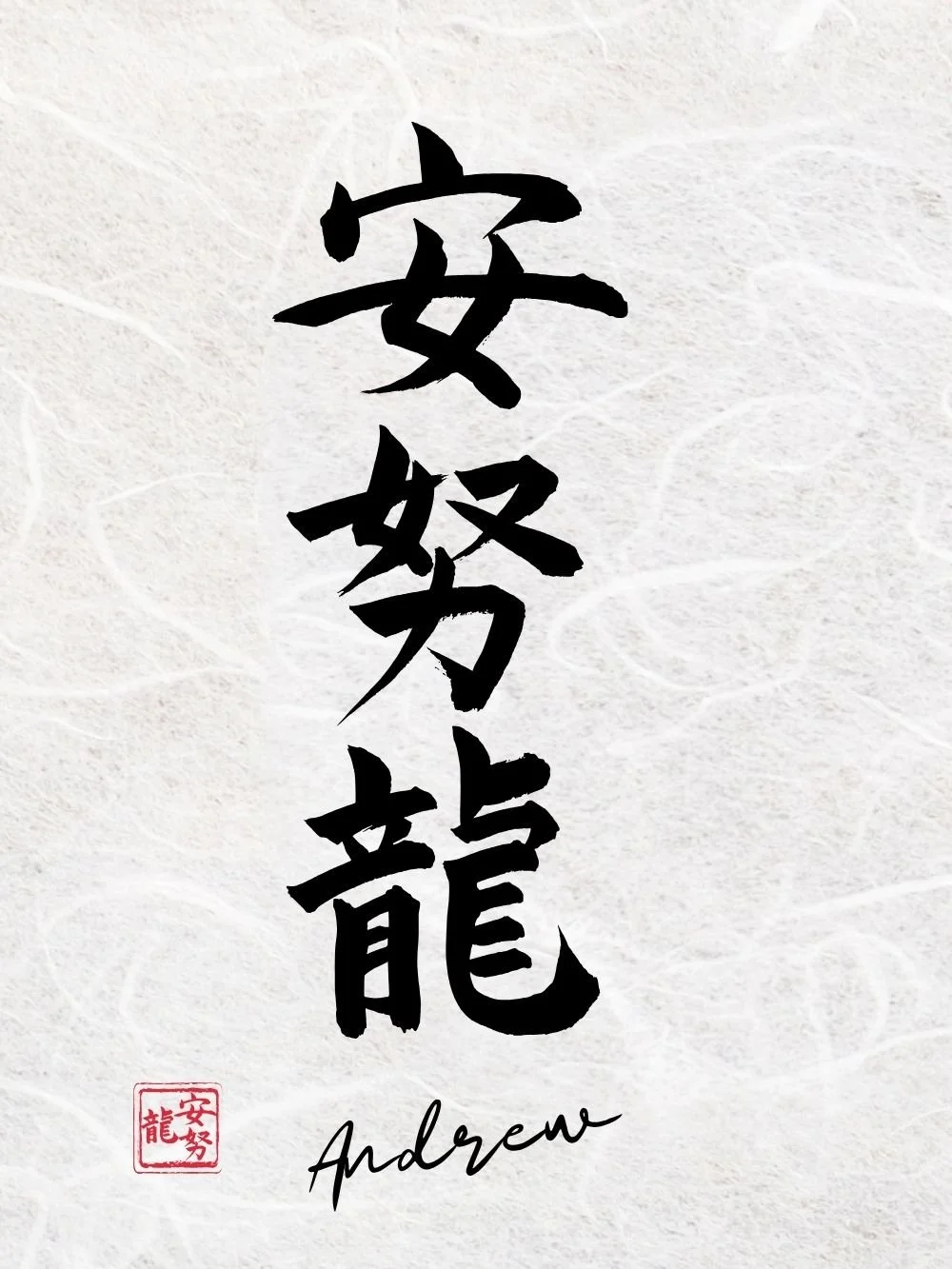
This is one way I write Andrew in Kanji:
安 (An) — peace, calm, security
努 (Do) — effort, perseverance, striving
龍 (Ryu) — dragon, strength, power
Together, I like to think of 安努龍 as representing someone who carries a sense of calm, works with determination, and has the strength of a dragon.
Same name.
But now the Kanji tell a story.
One Name Can Have More Than One Kanji Version
This is important.
There isn't a dictionary that says:
Andrew = 安努龍
Another combination of Kanji could represent similar sounds while creating a completely different meaning and feeling.
That's what makes Ateji so interesting.
Choosing the Kanji is part language, part meaning, and part creativity.
More Names in Japanese Kanji
Eric → 恵利空
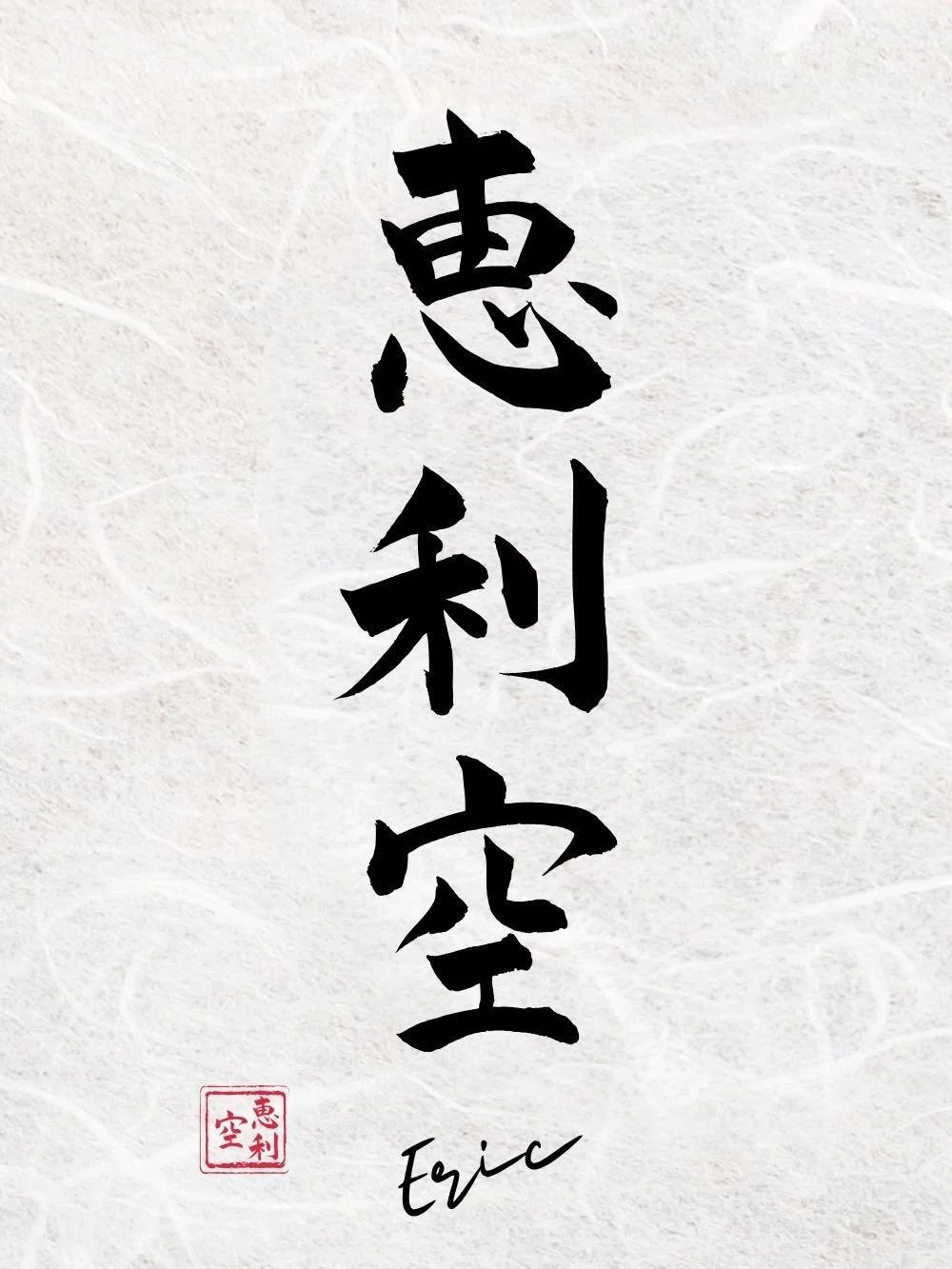
恵 (E) — blessing, grace
利 (Ri) — benefit, advantage
空 (Ku) — sky, openness
The characters create an image of grace, possibility, and an open sky.
Sara → 咲良
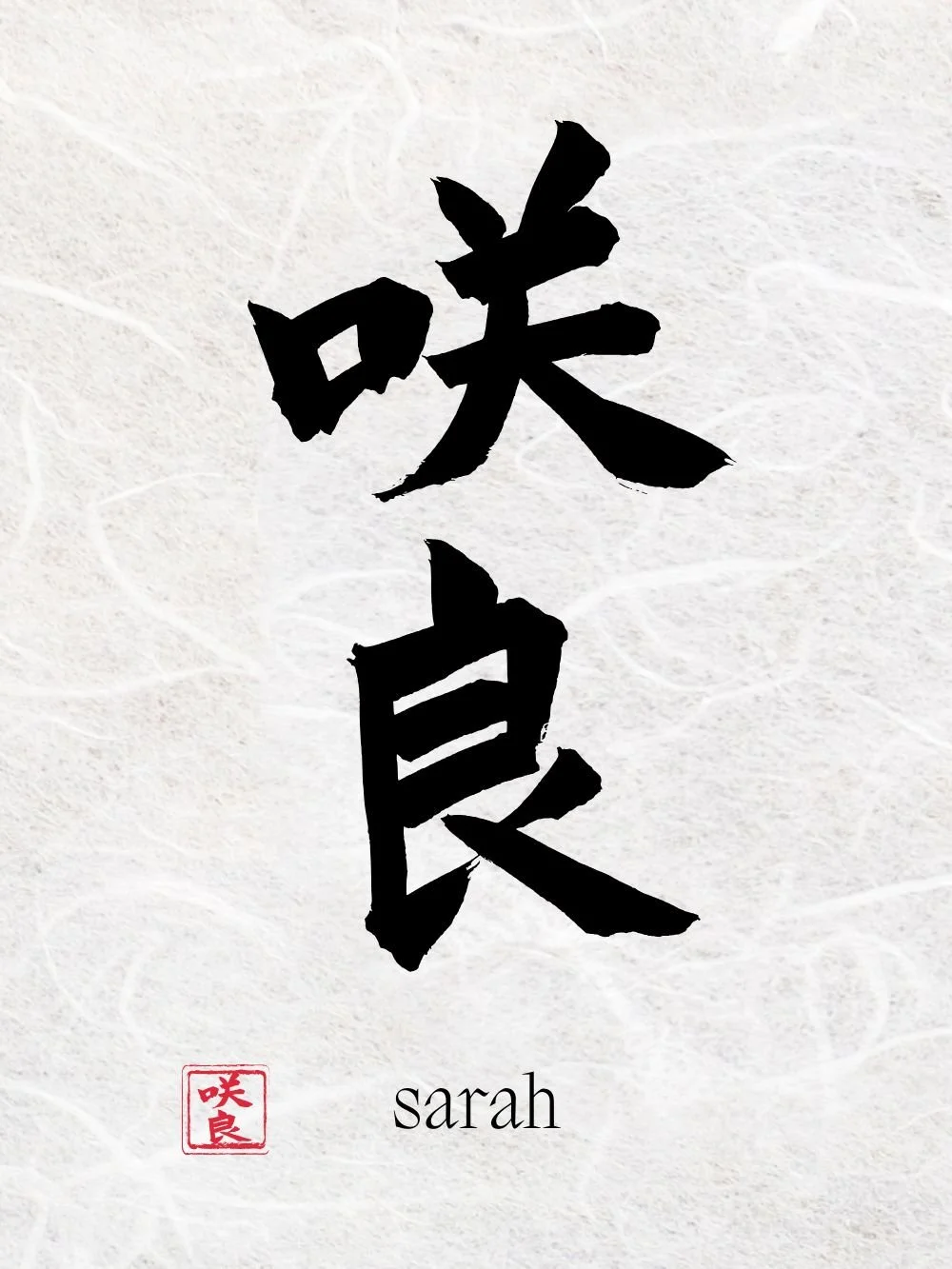
咲 (Sa) — to bloom, blossom
良 (Ra) — good, fine, beautiful
Together, 咲良 creates the feeling of “a beautiful bloom” or someone who blossoms beautifully.
And here's something interesting: 咲良 is also used as a real Japanese given name, so Sara is a great example of a foreign name that can be represented with Kanji that feel very natural in Japanese.
Michael → 真池瑠
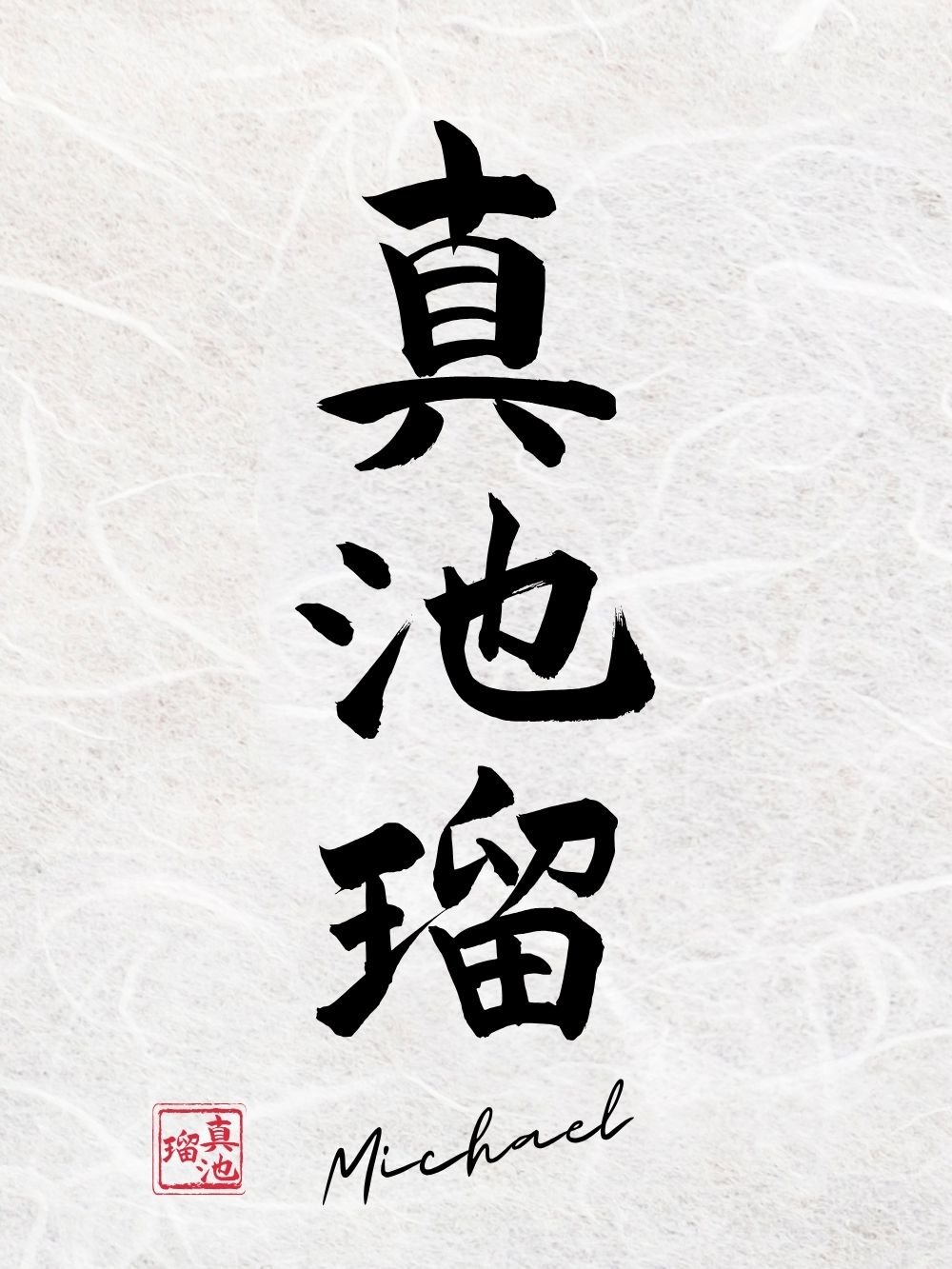
[INSERT MICHAEL CALLIGRAPHY IMAGE HERE]
真 (Ma) — truth, sincerity
池 (Ike) — pond
瑠 (Ru) — lapis lazuli, a precious blue gemstone
Together, the characters create their own visual and symbolic interpretation of the sound of Michael.
So, What Would Your Name Look Like in Kanji?
That's the fun part.
Your name doesn't have to be represented only by sound.
With “Ateji”, we can explore Kanji that match the pronunciation while giving the name its own meaning, personality, and story.
I've been creating personalized Japanese Kanji names for people around the world, one name at a time.
What would YOUR name look like in Japanese Kanji?
Want Me to Create Yours?
I create personalized Japanese name art using Kanji selected for both sound and meaning.
Each name is created individually—not simply generated by an automatic translator.
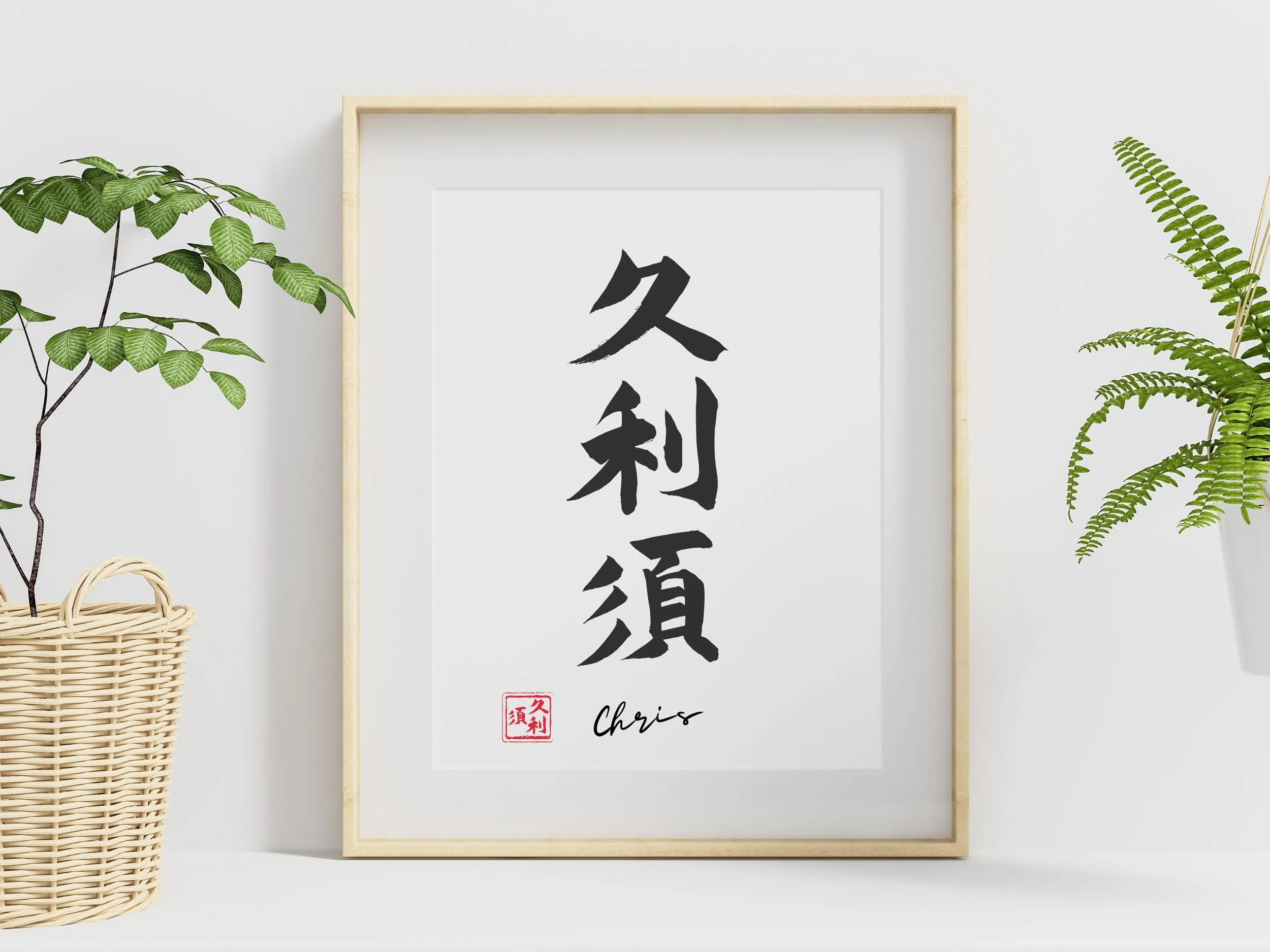
So you can print it out and frame it for your room decor, birthday gifts, and such!
🇯🇵 Moto's Tip
If you simply want to write your name the standard Japanese way, use Katakana.
If you want to explore your name creatively through Kanji, sound, and meaning, that's where Ateji gets fun.
There may not be just one “correct” answer.
And that's exactly the point.