
Japanese Onsen Etiquette: What to Know Before You Go
Going to an onsen (温泉) or sento (銭湯) can be one of the best experiences you have in Japan.
But if it’s your first time, it can also be a little intimidating.
Where do I put my towel?
Do I shower first?
Can I wear a swimsuit?
And why is everyone walking around with a tiny towel?
The good news is that Japanese bath etiquette is actually pretty simple once you understand one important idea:
The bath is for soaking and relaxing — not for washing.
That explains most of the rules.
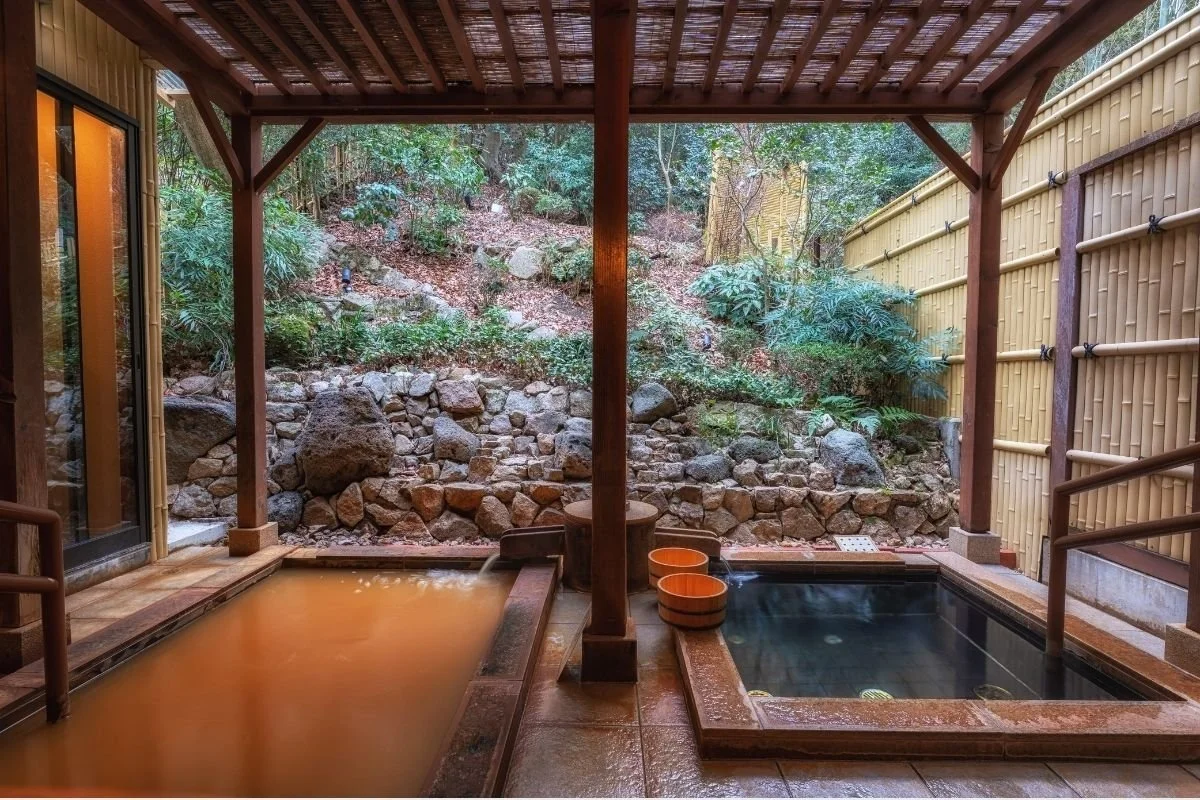
Onsen vs. Sento: What’s the Difference?
An onsen (温泉) is a bath that uses naturally heated hot spring water that meets Japan’s legal definition of an onsen.
A sento (銭湯) is a public bathhouse and does not necessarily use natural hot spring water.
The water may be different, but the basic bathing etiquette is very similar.
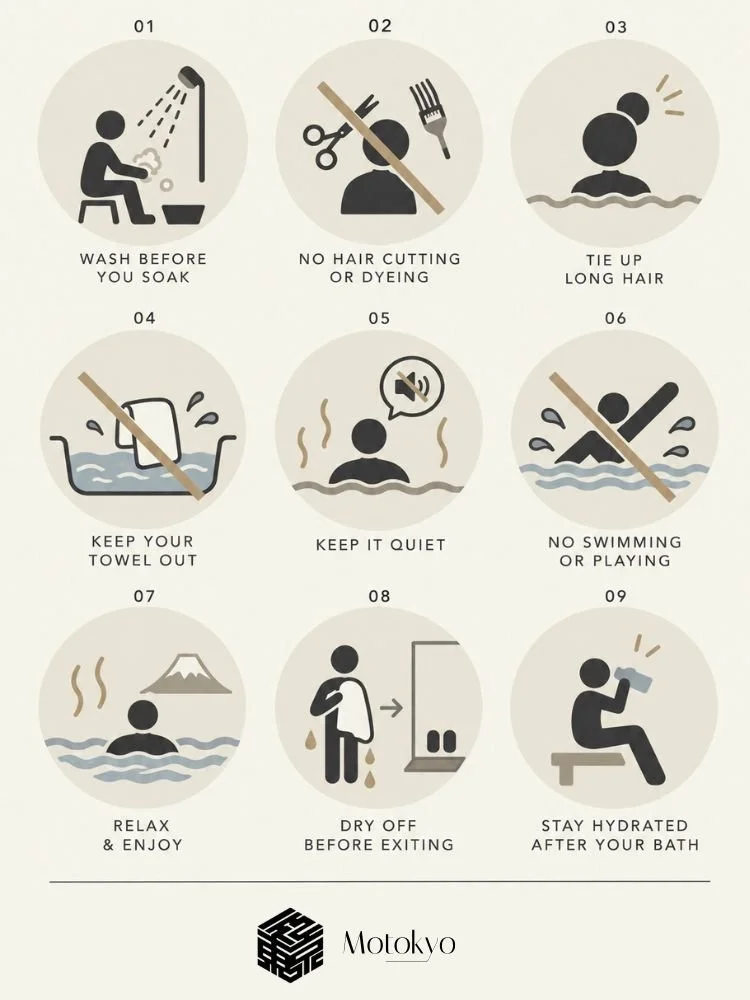
Want a printable version? Keep these Japanese onsen rules handy with my printable Onsen & Sento Etiquette Guide.
1. Take Off Everything Before Entering
In most traditional onsen and sento, you enter the bathing area completely naked.
Swimsuits are generally not worn unless the facility specifically says otherwise.
Your clothes and larger belongings stay in the changing room. You can usually bring a small wash towel into the bathing area with you.
And yes — everyone else is naked too.
It feels surprisingly normal once you're there.
2. Wash Your Body Before Getting Into the Bath
This is probably the most important rule.
Before entering the shared bath, sit at one of the washing stations and wash yourself thoroughly.
You'll usually find a small stool, bucket, shower, shampoo and body soap.
The bath itself isn't where you get clean.
You get clean first. Then you soak.
Once you understand that, Japanese bathing culture makes much more sense.
3. Keep Your Small Towel Out of the Water
That little towel can be used while washing and carried around the bathing area.
But don't put it into the bath water.
You can leave it beside the bath or — as you'll often see Japanese people do — fold it and put it on your head.
Yes, that's actually a thing.
4. Enter the Water Slowly
Japanese baths can be hot, especially if you're not used to them.
Rather than jumping straight in, ease yourself into the water.
You can also splash a little hot water over your body before entering. In Japanese this is called kakeyu (かけ湯).
It helps your body adjust to the temperature and rinses you once more before you enter the shared bath.
5. Don't Swim
An onsen may look like a little swimming pool.
It isn't one.
The idea is to sit, soak and relax. Avoid swimming, splashing or doing anything that disturbs other people.
Japanese public baths tend to be fairly quiet places.
6. Keep Long Hair Out of the Water
If you have long hair, tie it up before entering the bath.
Just like your towel, your hair should generally stay out of the shared bath water.
It's another small part of keeping the water clean for everyone.
7. Keep Your Voice Down
You don't have to be silent.
People talk with friends and family in public baths all the time.
But think relaxed conversation, not swimming-pool volume.
An onsen or sento is a place where people come to unwind.
8. Dry Off a Little Before Returning to the Changing Room
When you're finished bathing, use your small towel to wipe excess water from your body before walking back into the changing area.
You don't have to be completely dry.
The idea is simply not to drip water all over the changing-room floor.
It's a tiny habit, but a very Japanese one: leave the shared space comfortable for the next person.
9. Drink Some Water Afterward
Hot baths can dehydrate you more than you realize.
After bathing, take a little time to cool down and drink some water.
And if you see people drinking milk from a little glass bottle afterward, that's another classic Japanese public-bath tradition.
What About Tattoos?
This is one area where there isn't one universal rule.
Some onsen and sento do not allow guests with tattoos, while others welcome them. Some facilities allow smaller tattoos if they are covered, and policies continue to vary from place to place.
Check the facility's tattoo policy before you go.
Don't assume that every Japanese bath has the same rule.
Moto's Tip
If you're nervous about your first onsen, don't try to memorize a huge list of Japanese bath rules.
Just remember this:
Wash first. Keep the shared water clean. Be considerate of the people around you.
Most of the etiquette follows naturally from those three ideas.
And don't worry too much about looking like an expert.
Watch what people around you are doing, relax, and enjoy one of my favorite parts of Japanese culture.
Why Japanese Baths Work This Way
Japanese bathing isn't only about getting clean.
For many Japanese people, the bath is the part that comes after getting clean — a place to warm up, slow down and relax.
That's why the same basic idea appears in Japanese homes, sento and onsen.
If you'd like to understand that side of Japanese culture, read my guide to Japanese Ofuro (Japanese bathing culture) next.
Once you understand the ofuro, all these onsen rules suddenly make a lot more sense.